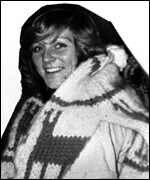
P.C. Tony Batters and Detective Constable Andy Smith interviewed Christine Holohan who was claiming to have been contacted by the spirit of the murdered woman, Jacqueline Poole. After going into a trance both officers were surprised at the detailed information Holohan provided. She not only described the murder scene but seemed to know a great deal of personal information about the victim. For example she mentioned her divorce, that she was suffering from depression and that she had just been given a prescription by her doctor. She also knew her maiden name (Hunt). But thats not all. She gave a detailed description of the killer and with automatic writing wrote down the name Pokie which we now know to be the killers nickname. In relation to the missing jewellery she wrote down garden. Batters states that out of around 130 points made by Holohan more than 120 have now been shown to be correct. The two officers found this quite remarkable but what apparently clinched it for them was an impromptu psychometric reading from Holohan to D.C. Andy Smith in which she told him quite personal information that she could not possibly have known prior to the meeting.
This case has now been investigated by Montague Keen and Guy Playfair from the Society for Psychical Research who seem convinced that this represents solid evidence of post mortem communication. The basis of this claim is that it was impossible for Holohan to have obtained this information by normal means and therefore must, by default, be paranormal. They believe it must have been either telepathy or mediumship. Another secondary aspect of this hypothesis seems to focus on a pullover that was retrieved from Ruarks dustbin following a search by police officers. It is argued that without the timely recovery of this piece of clothing Ruark may well have once more escaped justice. Montague Keen issued a statement which was quoted in a discussion forum (JREF Forum)
Regarding the pullover he says;
but the fact is that, without the help of the medium's statements, the police would not have retrieved the pullover or interviewed and taken statements from everyone with whom Ruark came into contact with that evening. Nor, according to Tony Batters, would they have checked and verified all Ruark's movements during previous fortnight.
He then elaborates further;
The pullover became vital as it was his only garment retained for forensics, and it showed numerous exchanges of blood and saliva from Jacqui Poole to him. This proved an act of violence, as opposed to the intimacy which he claimed in his defence at Court.
I believe the above fairly accurately summarizes the case for the believers. At the time of writing Keen and Playfairs report has not been published. When it is I may add to the above.
Back to top
My interest in the case
I first became interested in this case following an email from Professor Chris French (See: http://www.goldsmiths.ac.uk/apru/) who was looking for background information about this case. My initial thought was that Holohan had had this information passed to her by someone who wanted to alert the police to the identity of Pokie Ruark and yet remain anonymous. There may still be some truth in this but further investigation shows that there is rather more to it. I should state at this point that there is very little chance of anyone conclusively proving that any particular theory is the correct one, however the task Adrian and I set ourselves was to discover whether an alternative natural explanation was possible.
I began to look further into the case after Montague Keen mentioned it in The Skeptic magazine and had asked, somewhat rhetorically, for a non-paranormal explanation. I obtained photocopies of articles published in local newspapers at the time and went over as much of the other information as was readily available on the Internet. Following this my letter was published in The Skeptic to which Montague Keen later responded. It was shortly after this that I was contacted by ASKE member Adrian Shaw, a currently serving police detective, who shared an interest in the case. We decided to work together and pool our information and began by identifying people who had worked on the case in order to seek their help.
Tony Batters very kindly supplied me with a copy of his notes along with how they related to the crime. We exchanged numerous emails. My impression was that Tony Batters, whilst persuaded by the paranormal explanation, was always ready to listen to my arguments and was extremely helpful on a number of occasions. I believe that he and I are essentially agreed about the facts but arrive at different conclusions. His role during the original investigation was largely administrative but he feels this gave him a good overview of the case and he was one of the few officers who remained involved throughout.
Adrian Shaw spoke to Detective Chief Inspector Norman McKinlay as well as the detective who originally took Ruark in for questioning and also retrieved the pullover from his dustbin. I managed to contact ex-Detective Superintendent Tony Lundy who now lives in Spain. Lundy was the officer in charge of the original investigation and McKinlay dealt with the 1999 re-investigation. We did contact other officers who either did not wish to discuss the case or never returned our calls.
Back to top
An alternative theory
The argument for the paranormal hypothesis relies on the apparent lack of opportunity for Holohan to have come by her information by normal means. I suggest that if we can show that it was possible for Holohan to provide the information without recourse to mediumship then, as this is the simpler* explanation, it should be regarded as more likely. However it would be true to say that just because something is possible it doesn't follow that that's what actually happened.
(*By "simpler" I mean in the Occam's Razor sense of the word, "plurality should not be posited without necessity." )
Before explaining our findings let me summarise what Adrian and I believe to be the series of events in 1983;
Friday 11th February 1983: Jacqueline Poole is murdered sometime during the evening approximately around 9 p.m.
Sunday 13th February 1983: Body discovered by P.C. Batters following a call from the father of Jacqueline Poole's current boyfriend who was concerned that she was not answering the door.
Monday 14th February 1983: Ruark voluntarily attends the local police station to make a statement following a police appeal for those who knew her to come forward.
This information was supplied by Tony Batters and this seems to conflict with account from other people connected with the case. However I am happy to assume this date is correct for now. Unfortunately we are dealing with events that took place 20 years ago and understandably memories fade.
Tuesday 15th February 1983: A local Detective Sergeant who acts as "pub liaison officer" makes enquiries at some of the local pubs. Whilst at The Windmill it is suggested to him that the person he should speak to is "Pokie" Ruark. As luck would have it during this visit Ruark entered the pub. The detective then put Ruark into a police car and took him in for questioning. Ruark has scratches on his hands which he later claims was due to coming off his motorcycle.
Also on this date the murder is briefly mentioned on the front page of the Hillingdon Mirror which describes Jacqui Poole as a "local divorcee".
At this point I am unsure as to when Ruark was released. During the investigation Ruark was detained a number of times but I do not have exact details.
Thursday 17th February 1983: Detective Constable Andy Smith and Police Constable Tony Batters visit Holohan and note her information. They are impressed by her knowledge of the case and the fact that she gave out accurate information about D.C. Smith during an impromptu psychometry reading. The local paper the Ruislip and Northwood Gazette ran a front page story about the murder and along with Jacqui's picture gives a list of the jewellery taken from her flat. See here for a copy (without photo). In her book 'A Voice from the Grave' Christine Holohan confirms that she first contacted the police on Thursday.
Friday 18th February 1983: Ruark is arrested and during a search of his premises a pullover is discovered in a dustbin and retained as evidence. In fact this may have happened earlier but we can't be sure.
It is surely reasonable to assume that this murder is going to be the subject of intense local gossip (see note below). Particularly in places like The Windmill which was not only the place from which Ruark was taken but where he also regularly drank with his girlfriend as indeed did Jacqui Poole and her boyfriend. Jacqueline Poole had a wide circle of friends and acquaintances, including a close friend who told the police of Jacqui Poole's rejection of Ruark's attempts to flirt with her along with a great deal of personal information about Jacqueline herself.
(14.10.06. In 'A Voice from the Grave' Holohan acknowledges that she overheard two women discussing the murder on Monday morning - three days before she contacted the police.)
At this point the address of Christine Holohan becomes very significant. She lived only 1.3 miles from The Windmill Pub.
Regarding the actual information Holohan supplied about the victim and her murderer Ill return to in a moment, but as for the psychometry reading given to the Detective Constable at the time Im afraid I dismiss this as simply cold reading doing its work. Police, no less than anyone else can be fooled. As far as I know there are no contemporary notes of what was actually said as opposed to what was remembered. If the information was what I think it was then I can see why the Detective was impressed but how he interpreted Holohans words may not be what she had actually intended. That he was amazed I have no doubt but by itself this is not very compelling. Although Andy Smith appears to have readily assisted the SPR he has refused to discuss the matter with either myself or Adrian.
According to D.C.I. McKinlay who spoke to Adrian there are no official notes of this meeting but Tony Lundy does remember Holohan being discussed and asked if she could provide some information that they didnt know already, such as the location of the missing jewellery. Alas it appears she couldn't, which is a pity as this would have been of considerable use to the investigation team. Lundy remained unimpressed.
In my first conversation with Lundy he said Ruark was "suspected immediately" and held in custody within the first 24 hours of the investigation and it would have been during this time that Ruarks premises were searched and the "vital" pullover discovered (at the time if a suspect was under arrest no search warrant would be required). This would have been at least 3 days before Holohan was interviewed. The officer who brought Ruark in (but not actually under arrest) also thought this happened within the first 24 hours. However according to Tony Batters Ruark attended voluntarily on that first Monday, but even if his being taken in wasn't until Tuesday this was still two days before Holohan was interviewed. Unfortunately there seems to be no way to pin this event down. Ruark was interviewed on a number of occasions and the pullover may well not have been retrieved until after she was interviewed.
From the above information it can be seen that it would certainly be possible for Holohan to obtain at least some information. Jacqui Poole would have no doubt been discussed in some detail as would Ruark. Both Tony Lundy and Norman McKinlay said it was common knowledge that Ruark was regarded as a suspect. At the time Holohan was 22 years old and lived with her sister. The probability is high that they would have mixed with other people of a similar age. In 1983 Ruark was also 22. However Holohan came out with other details that helped make an impression on Tony Batters and his colleague.
What did Holohan actually say
Tony Batters has generously given me permission to publish his notes which can now be read here. If you remove all the personal references about Jacqui Poole and Anthony Ruark, which I believe would have been easy to find out about at The Windmill and other local pubs, the notes are reduced quite drastically. There are also some references to the jewellery such as the St. Christopher that was mentioned in the local paper (here). Holohan also provides details of the crime and as it would be upsetting for her family to have these debated in public this text has been removed. Nevertheless certain things can be inferred from what was stated in the newspaper article above i.e. she was beaten, sexually assaulted and strangled. It is impossible to know what sort of information was discussed publicly by the many friends and acquaintancies who knew Jacqui Poole. People like to play amateur detective and aspects of the crime could have been discussed. This is just conjecture on the part of Adrian and me and we leave others free to disagree.
There are a few trivial items that impressed Batters and his colleague and latterly Montague Keen, e.g.,
"2 cups in kitchen. 1 washed up. She made cup of coffee"
What might these words actually mean How many ways could they be interpreted Is she saying that Jacqui Poole only had two cups in her entire kitchen One in a cupboard or one the work surface and the other washed up on the draining board Did she make coffee for the murderer, a friend Or perhaps it implies she made coffee for herself. When did she make coffee
Tony Batters fits the remarks to the facts, "Kitchen 1st left of hall as enter. 2 cups on view, others stored. 1 washed and upside down on draining board. Other cup unwashed, quarter full of coffee."
Whatever was meant by this particular piece of trivia it did not provide any relevant information regarding the crime. It is entirely possible this was simply a guess. In his article when referring to some of the information Batters himself says, These could have been guesswork. I tend to agree. Unsatisfying as this suggestion might be it remains a possibility as even if it was wrong it would be difficult to disprove. If one cup, washed or unwashed, had been found would Holohan's statement still fit There is another possibility. When the body was discovered the father of Jacqui Poole's boyfriend entered the premises with Tony Batters. Maybe he saw something and maybe he didn't but the flat was quite small and this remains a possibility. Perhaps he looked through the window (as far as I know the front window of the flat looks out from the kitchen). This man was also one of the last people to see Jacqui alive and left her flat about an hour prior to the murder. Were these cups there at the time I don't know but if they were then obviously he already knew about them and if they weren't then maybe he caught sight of them later and thought this was significant. Of course he didn't just run off and tell Christine Holohan but perhaps if the cups puzzled him he may have mentioned it to someone.
In fairness I cannot fully explain this away and neither am I likely to be able to, but if all the other details had been removed would the police have been so impressed with what information was left Personally I doubt it.
"2 men called earlier. She didn't want to go."
According to Tony Batter's comments two people were due to take Jacqui to her new temporary bar job at Whispers Night Club and called for her at 7:45pm. Also according to the same notes the father of her boyfriend didn't leave until 8:05pm and thus may have known about the earlier callers. Either because he was there or because she told him afterwards. Again, did he mention this to anyone else
The actual content of Tony Batters notes sounds suspiciously like cold reading to me. As Adrian noticed sometimes Holohan talks as if she is Jacqui Poole speaking directly through the Medium whilst at others she slips back into the third person. She says things like, You have got the right group rather than, You had the right man in custody last Monday.
In his article Tony Batters writes, She knew that in the course of robbing her, the killer had left two of the many rings she always wore.
According to Batters' notes what she actually said was, Someone knows about the jewellery. She had some stolen. Some left. Was there another ring from these 2
Remember that the theft of jewellery had been reported extensively in the local paper so general comments about jewellery are not that remarkable. She doesnt actually say two rings were left behind. These notes were taken from a verbal statement. Perhaps Holohan actually said, Was there another ring from these too which was then misinterpreted by Batters. As this jewellery has never come to light the statement about "someone knowing" about it might also be wrong. Tony Lundy feels sure that had he tried to sell it, something would have eventually surfaced.
Did Holohan help the investigation
Much has been made of the pullover retrieved from Ruark's dustbin and how if it wasn't for Holohan's information this might never have been seized. But just how significant did this piece of evidence turn out to be When asked by Adrian Shaw, D.C.I. McKinlay couldnt even remember the pullover. Tony Lundy does recall "fibres" being mentioned at the trial but he and McKinlay are emphatic that the conviction was achieved by the DNA evidence from semen and from skin found underneath the victims fingernails. The pullover played no part and even if it did it was not due to anything Holohan had said. I find it curious that Holohan gives a pretty detailed description of Ruark but not once describes what he was wearing at the time. If this pullover was of such significance why didn't she say what he was wearing One explanation might be because she didn't know. What Tony Lundy is sure of, and he has re-stated this unequivocally, is that at no time during the investigation did he take any action based on information supplied by Holohan. He only ever followed normal police procedure.
It could be argued that Lundy ordered various gardens to be dug up but if so all that did was to waste police time. I can't be sure if this garden digging did in fact happen but let's suppose it did. Let's also suppose Ruark was arrested because the entire investigation team was so impressed with Holohan that they went straight out and arrested Ruark and searched his premises. Does this affect the claim that the source of her information was an discarnate spirit Of course not. As far as I can tell with any certainty she provided no information that affected, influenced, or progressed the investigation in any way whatsoever.
Back to top
Who solved this case
Last of all both Adrian and I would like to point out that the case was eventually solved as a result of the diligent and professional investigation carried out by the police combined with the tremendous advances in forensic science. This is where any credit for solving the case should be focused. In the end the hard work of the original investigation team enabled DCI McKinlay to eventually get a conviction. Had Tony Lundy had access to modern DNA techniques (as opposed to a medium) Ruark would have been serving his sentence that much sooner.
Summary
Lets look once again at Holohans information. Anthony Ruark was already identified as a major suspect at least two days before Holohan wrote down his nickname, Pokie. According to both McKinlay and Lundy it was common knowledge that he was a suspect and apart from his arrest he had been seen hanging around both Jacqui Pooles flat and her place of work. Holohan only lived about three miles from the murder scene and and less than one and a half miles from The Windmill pub. It would be entirely possible to discover much of this information from local gossip. Due to a similarity in their age it is quite likely that they moved in similar social circles and it may be that Holohan knew something about either Ruark or Poole long before the murder had taken place. We cannot even be certain that a close friend or even Jacqui Poole herself had not consulted Holohan in her capacity as a psychic. In Lundy's final report he wrote that, "of all the people interviewed Ruark was still the most likely person to have committed the murder."
An appeal
There still remain questions that need to be answered and if you can provide any further information about this case then Adrian and I would be very pleased to hear about it. You can or write in confidence to:
Tony Youens
Elsewhere (http://www.victorzammit.com/articles/montague.html - Comment) Montague Keen has made comments about me in reference to the recent programme The Ultimate Psychic Challenge. It seems out of regard for Jacqui Poole's relatives the show asked him not to mention the above case. Into this Keen reads the following:
"I may be wrong, but this arbitrary prohibition is suspicious, all the more so since I learn that Youens, desperate to find holes in the evidence, has contacted the police officer responsible and found his theories shot to pieces by facts."
Far from 'desperately looking' I discovered so many holes in the evidence (see all of the above) that Keen's case resembles a Swiss cheese. As far as I am aware the investigation carried out by Keen and Playfair never included the questioning of the two most senior and highly respected detectives involved. A serious omission surely Still I'm certain he interviewed the medium herself with the typical thoroughness we've come to expect of an SPR investigator.
On a JREF discussion forum Keen attempts to discredit Tony Lundy and the information he supplied by writing, "I have not spoken to Lundy for reasons previously given. I see no reason to now, especially when it is clear that his memory of events at the trial two years ago is almost as fallible as his recollection of the sequence of events twenty years ago."
Later in this communique Keen adds,
"It is obvious that anyone other than a purblind bigot to whom Batters or Smith reported the outcome of the interview would have been impressed and spurred by it, but more than likely, such is the nature of memory and wish-fulfilment -- that Lundy would not wish his pride to be dented by any recollection of any statements made by a medium, especially if he felt it somehow reflected on his achievement as the man primarily responsible for solving the only outstanding murder mystery of his career."
Regarding the possible explanation put forward by Adrian Shaw and I, Keen dismisses it thus;
"However one juggles around with the dates, the hypothesis is wildly improbable that Holohan, even had she the time, knowledge and incentive to gather all the information which came in unsequential bits and pieces during the interview, would have been able to acquire all the information normally."
Regarding the current scientific view of mediumship Keen tells us;
"Shaw dismisses all the literature of apparent evidence of discarnate communication as mainly anecdotal "as in this case". It is not altogether surprising that a detective unfamiliar with the psychical research literature he is criticising should display crass ignorance of this sort; but presumably this also reflects the views of Tony Youens who certainly should know better. In no way can the evidence in the present case be described as anecdotal. No more can the vast accumulation of recorded readings and automatic writings which have been the subject of intensive and thorough analysis for well over a century be disregarded as anecdotal."
In Keen's worldview it seems communication with the dead is somehow entirely likely whereas a natural explanation is "improbable". Sentiments no doubt passed on to him by Sir Arthur Conan Doyle.
Please feel free to make up your own mind.
Copyright 2003 © Tony Youens
Relevant links:
Tony Batter's interview notes
Text from local newspaper
|